The Essential Laws of Explained

Understanding the Role of a Commercial General Contractor

In the realm of construction, the role of a commercial general contractor (CGC) is pivotal. These professionals are responsible for the overall management of commercial construction projects, which can range from office buildings and retail spaces to industrial facilities and large-scale developments. Their expertise ensures that projects are completed on time, within budget, and to the desired quality standards. Understanding the intricacies of what a commercial general contractor does can help businesses and stakeholders navigate the complexities of construction effectively.

One primary responsibility of a commercial general contractor is to oversee the entire construction process. This includes project planning, procurement of materials, hiring and managing subcontractors, and ensuring compliance with local building codes and regulations. The CGC acts as the main point of contact for all parties involved in the project, including clients, architects, and engineers. This centralized communication is crucial for addressing any issues that may arise during the construction phase and for keeping the project on track.

Additionally, a commercial general contractor must possess a keen understanding of budgeting and financial management. They are tasked with providing accurate cost estimates and managing the project’s financial aspects from labor to materials. This requires not only strong organizational skills but also the ability to foresee potential financial pitfalls and implement strategies to mitigate risks. Having a CGC with sharp financial acumen can lead to significant savings and a more efficient construction process.

Safety is another critical aspect of a commercial general contractor’s role. They are responsible for ensuring that all safety protocols are followed on the job site. This includes conducting frequent safety inspections, training workers on proper safety measures, and ensuring compliance with Occupational Safety and Health Administration (OSHA) regulations. A strong emphasis on safety not only protects the workforce but also minimizes the risk of project delays caused by accidents or injuries.

In conclusion, the role of a commercial general contractor is multifaceted and integral to the success of any commercial construction project. With responsibilities ranging from project management and budgeting to ensuring safety standards, CGCs play a key role in transforming architectural visions into reality. Engaging a reputable commercial general contractor can enhance the overall efficiency of the construction process and contribute to the long-term success of the built environment.

5 Key Takeaways on the Road to Dominating

Why People Think Are A Good Idea

Leave a Reply

Your email address will not be published. Required fields are marked *

Related Post

The Best Advice About I’ve Ever WrittenThe Best Advice About I’ve Ever Written

Cabinets Roaring: The Unseen World of Kitchen Cabinets

When it comes to designing and building a kitchen, one of the most crucial components is the cabinets. These wooden wonders are not only aesthetically pleasing but also serve as a functional storage solution for your kitchen essentials. However, have you ever stopped to think about the inner workings of these cabinets? The intricate mechanisms, the precision engineering, and the attention to detail that goes into crafting these masterpieces? In this article, we’ll delve into the world of cabinets, exploring the unseen aspects that make them roar with functionality and efficiency.

1. The Anatomy of a Cabinet

A cabinet is more than just a box with doors. It’s a complex system comprising multiple components, each playing a vital role in its overall functionality. From the sturdy frame to the precision-crafted hinges, every part is carefully designed to work in harmony. The cabinet’s anatomy is a marvel of engineering, with each component working together to create a seamless user experience.

2. The Frame: The Backbone of the Cabinet

The frame is the foundation of the cabinet, providing the structural integrity and support for the entire unit. Made from high-quality wood or engineered wood products, the frame is carefully crafted to ensure maximum durability and stability. The frame is the backbone of the cabinet, providing the necessary support for the doors, shelves, and other components.

3. The Doors: The Face of the Cabinet

The doors of a cabinet are more than just a decorative element. They’re the face of the cabinet, providing a first impression of the overall design and aesthetic. Doors come in a variety of styles, from traditional to modern, and are carefully crafted to ensure a smooth, quiet operation. With precision-crafted hinges and soft-close mechanisms, the doors glide open and closed with ease, providing a seamless user experience.

4. The Shelves: The Heart of the Cabinet

Shelves are the heart of the cabinet, providing the necessary storage space for your kitchen essentials. Made from high-quality materials, such as wood or glass, shelves are carefully crafted to ensure maximum durability and stability. With adjustable shelf pins and precision-crafted brackets, shelves can be easily adjusted to accommodate your specific storage needs.

5. The Drawers: The Workhorse of the Cabinet

Drawers are the workhorse of the cabinet, providing a convenient and efficient way to store your kitchen essentials. With precision-crafted slides and soft-close mechanisms, drawers glide open and closed with ease, providing a seamless user experience. Drawers come in a variety of sizes and styles, from traditional to modern, and are carefully crafted to ensure maximum durability and stability.

6. The Hardware: The Unsung Heroes

Hardware is the unsung hero of the cabinet, providing the necessary functionality and efficiency for the entire unit. From precision-crafted hinges to soft-close mechanisms, hardware is carefully crafted to ensure maximum durability and stability. With a wide range of styles and finishes available, hardware can be easily customized to match your specific design aesthetic.

7. The Finishing Touches: The Art of Cabinet Finishing

The finishing touches are the final step in the cabinet-making process, where the entire unit is carefully crafted to ensure maximum durability and stability. From the application of a protective finish to the installation of decorative trim, the finishing touches are carefully crafted to ensure a seamless user experience.

8. The Installation: The Final Step

The installation of the cabinet is the final step in the process, where the entire unit is carefully installed and assembled. With precision-crafted components and expert installation, the cabinet is carefully crafted to ensure maximum durability and stability. From the precise alignment of the doors to the careful installation of the shelves, every detail is carefully considered to ensure a seamless user experience.

9. The Maintenance: The Key to Long-Term Performance

Maintenance is the key to long-term performance, where regular cleaning and maintenance are essential to ensure the longevity of the cabinet. From the cleaning of the doors to the lubrication of the hinges, regular maintenance is crucial to ensure maximum durability and stability.

10. Conclusion

In conclusion, cabinets are more than just a box with doors. They’re a complex system comprising multiple components, each playing a vital role in its overall functionality. From the frame to the hardware, every part is carefully crafted to ensure maximum durability and stability. With precision-crafted components and expert installation, cabinets are designed to provide a seamless user experience, making them an essential component of any kitchen design.

How I Became An Expert on

News For This Month:

5 Uses For5 Uses For

The Art of Aluminum Welding Fabrication Services

Aluminum welding fabrication services have become increasingly popular in recent years due to the growing demand for lightweight and durable materials in various industries. Aluminum is a versatile metal that offers numerous benefits, including its high strength-to-weight ratio, corrosion resistance, and ability to withstand extreme temperatures. However, welding aluminum can be a challenging process, requiring specialized skills and equipment. In this article, we will explore the art of aluminum welding fabrication services, highlighting the benefits, challenges, and best practices involved in this process.

Benefits of Aluminum Welding Fabrication Services

Aluminum welding fabrication services offer numerous benefits, making them an attractive option for various industries. One of the primary advantages is the ability to create lightweight yet strong structures, which is particularly important in aerospace, automotive, and construction industries. Aluminum is also corrosion-resistant, reducing the need for additional coatings or treatments, which can save time and money. Additionally, aluminum welding fabrication services can be used to create complex shapes and designs, making them ideal for applications where precision and accuracy are crucial.

Challenges of Aluminum Welding Fabrication Services

While aluminum welding fabrication services offer numerous benefits, they also present several challenges. One of the primary challenges is the difficulty in welding aluminum, which requires specialized skills and equipment. Aluminum has a high thermal conductivity, making it prone to overheating and warping during the welding process. Additionally, aluminum oxide forms on the surface of the metal, which can create porosity and reduce the strength of the weld. Furthermore, aluminum welding fabrication services often require the use of filler materials, which can add complexity to the process.

Best Practices for Aluminum Welding Fabrication Services

To overcome the challenges associated with aluminum welding fabrication services, it is essential to follow best practices. One of the most critical best practices is to use the correct welding technique, which involves using a combination of heat input, welding speed, and filler material. It is also essential to ensure that the welding equipment is properly maintained and calibrated to prevent overheating and warping. Additionally, it is crucial to use high-quality filler materials and to follow proper cleaning and preparation procedures to ensure a strong and durable weld.

Types of Aluminum Welding Fabrication Services

Aluminum welding fabrication services can be categorized into several types, each with its unique characteristics and applications. One of the most common types is TIG (tungsten inert gas) welding, which is used for precision welding and is ideal for applications where high-quality welds are required. Another type is MIG (metal inert gas) welding, which is used for production welding and is ideal for applications where high-speed welding is required. Finally, there is also the option of brazing, which is used for joining aluminum components and is ideal for applications where high-temperature resistance is required.

Applications of Aluminum Welding Fabrication Services

Aluminum welding fabrication services have a wide range of applications across various industries. One of the most common applications is in the aerospace industry, where aluminum is used to create lightweight yet strong structures for aircraft and spacecraft. Another application is in the automotive industry, where aluminum is used to create lightweight yet strong components for vehicles. Additionally, aluminum welding fabrication services are also used in the construction industry, where aluminum is used to create structural components for buildings and bridges.

Equipment and Tools Used in Aluminum Welding Fabrication Services

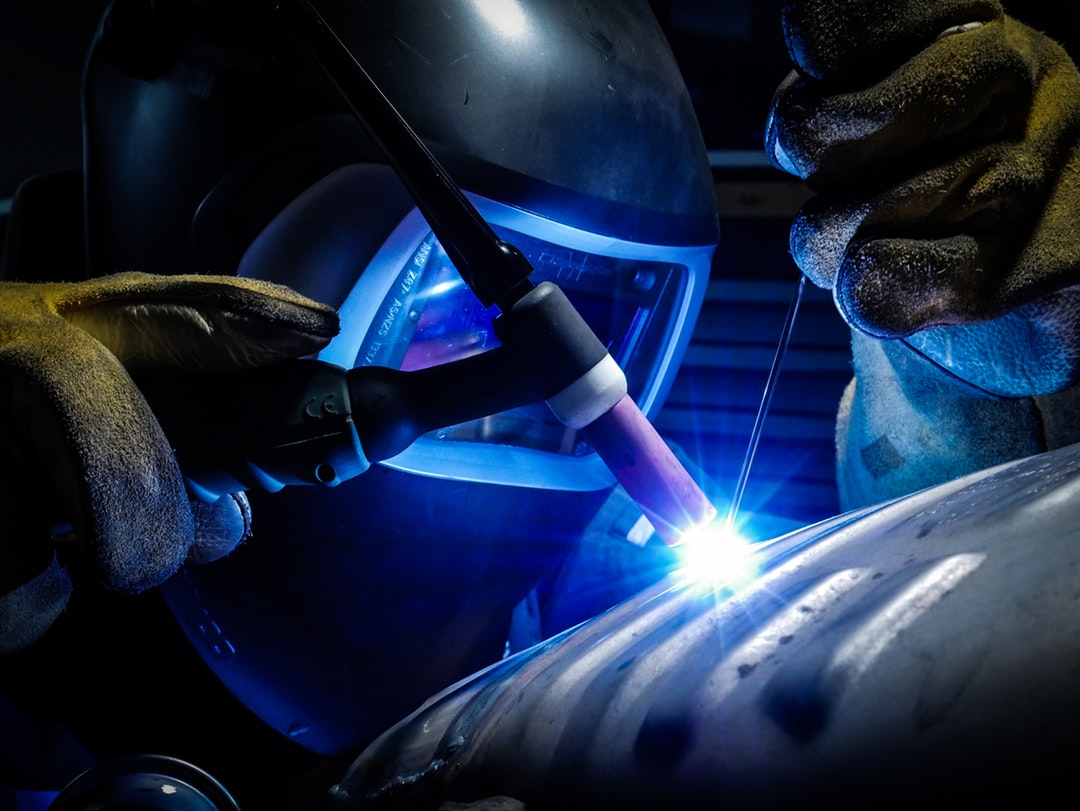
Aluminum welding fabrication services require specialized equipment and tools to ensure high-quality welds. One of the most critical pieces of equipment is the welding machine, which is used to generate the heat and energy required for welding. Other essential tools include welding torches, welding guns, and filler materials. Additionally, aluminum welding fabrication services also require specialized safety equipment, including welding helmets, gloves, and safety glasses.

Safety Considerations in Aluminum Welding Fabrication Services

Aluminum welding fabrication services require careful attention to safety to prevent injuries and ensure high-quality welds. One of the most critical safety considerations is the use of proper personal protective equipment (PPE), including welding helmets, gloves, and safety glasses. Additionally, it is essential to ensure that the welding area is well-ventilated and free from flammable materials. Furthermore, it is crucial to follow proper welding procedures and to ensure that the welding equipment is properly maintained and calibrated.

Conclusion

Aluminum welding fabrication services offer numerous benefits, including the ability to create lightweight yet strong structures, corrosion resistance, and high-temperature resistance. However, welding aluminum can be a challenging process, requiring specialized skills and equipment. By following best practices, using the correct welding technique, and ensuring proper safety precautions, aluminum welding fabrication services can be used to create high-quality welds and structures. Whether you are in the aerospace, automotive, or construction industry, aluminum welding fabrication services can help you achieve your goals and create innovative solutions.

A Simple Plan For Researching

A Simple Plan:

Overwhelmed by the Complexity of ? This May HelpOverwhelmed by the Complexity of ? This May Help

Picking the Right Home Remodeling Contractor for Your Job

Starting a home renovating task can be both exciting and challenging. Whether you’re planning a kitchen improvement, a washroom upgrade, or a total home makeover, selecting the best contractor is vital to the success of your job. With countless alternatives readily available, it’s essential to comprehend the essential variables to consider when working with a home redesigning contractor that meets your needs and expectations.

One of the very first steps in selecting a redesigning service provider is to perform complete study. Begin by asking loved ones for suggestions, and browse on the internet reviews to gather a checklist of possible candidates. Web sites devoted to home renovation often feature ratings and testimonies, which can offer useful understandings right into the experiences of previous customers. As soon as you have a shortlist, don’t wait to connect and request for references from previous projects to assess the professional’s abilities and integrity.

Next, it’s important to validate the credentials of the specialists you’re considering. Guarantee they are accredited and insured, as this protects you and your residential or commercial property in situation of accidents or problems throughout the renovating process. Furthermore, ask about their experience in the particular sort of remodeling you wish to take on. A professional that specializes in cooking area improvements might not have the same expertise in shower room remodels. Understanding their location of proficiency can assist you straighten their skills with your vision.

When meeting with potential contractors, interaction is vital. Review your concepts, spending plan, and timeline openly. An excellent specialist will listen to your needs and provide tips based upon their experience. Request created estimates from several service providers, and examine them thoroughly to recognize what is consisted of in the cost. This openness will aid you stay clear of hidden prices later on in the job and guarantee every person gets on the exact same web page.

Finally, count on your instincts. The relationship you build with your contractor is important, as he or she will certainly be in your home and working closely with you throughout the remodeling process. Search for somebody who shows expertise, regard, and a genuine interest in making your vision revived. By putting in the time to pick the best home renovating professional, you can relieve stress and anxiety and set the phase for an effective change of your home.

Smart Ideas: Revisited

What Research About Can Teach You